A A
RSS

After the Aftermath

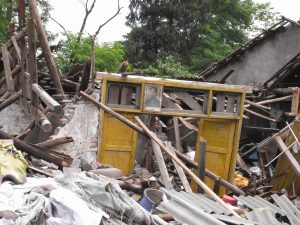
MMc JanFeb10 coverFive years ago this week, the Indian Ocean tsunami killed more than 150 million people across nearly a dozen countries in southeast Asia. The natural event also displaced millions, leaving them without homes, jobs or schools. Researchers and aid groups that have worked toward recovery understand that rebuilding is only part of the answer, but addressing the social and emotional needs of affected people is a complex mission.

Growing populations and the altering climate and weather patterns are placing more people in risky situations, and making more individuals vulnerable to natural disasters. After attending a talk by Lori Peek, a sociology professor at Colorado State University, about the lag in research on how traumatic events affect families, I started pursuing this story to understand what we know — and what we have dispelled — when it comes to protecting and meeting the long-term needs of disaster victims and refugees.

My article, “After the Aftermath,” appears in the Jan/Feb 2010 issue of Miller-McCune magazine. I spoke with university researchers and nonprofit officials who have worked with and studied the impacts of the Sichuan earthquake, the Indian Ocean tsunami, Hurricane Katrina, 9/11, and several other major tragedies and disasters. One of the key pieces that has researchers’ attention is the lack of understanding toward helping children through such events:

Hurricane Katrina didn’t flatten hundreds of schools, as happened last year in China, but the 2005 storm and subsequent flooding displaced 163,000 children 19 years old or younger. The hurricane flung kids across the country during the haphazard evacuation; 5,100 juveniles were reported missing in the weeks that followed, and it would take seven months to reunite them with their families.

Children are a particularly understudied population in terms of disaster research, and while some people believe kids can prove exceptionally resilient, the harsh consequences of Katrina suggest less promising outcomes. “We have very little good research on mass displacement and natural disasters,” says Lori Peek, a sociology professor at Colorado State University. “But I think we’re going to see a lot more of it, so I think we need to learn more about what went wrong.”

Peek has conducted hundreds of hours of interviews with adults and children who landed in Colorado after Katrina. She’s also spoken to individuals who have returned to the Gulf region. Field studies of displaced children by a dozen researchers, including Peek, reveal magnified risks of emotional and social suffering, not to mention increased mental health problems.

Children displaced by Katrina face overcrowding at new schools and discrimination from new peers. They are tuned in to their families’ financial instability and crave the friends and relatives who once formed their social network. “In Colorado, people want to know, ‘Are they better off?’ That’s really difficult [to say] because what does ‘better off’ mean?” Peek says.

“The Legacy of Katrina’s Children,” a paper authored by David Abramson and colleagues at Columbia University’s National Center for Disaster Preparedness, found that children affected by the storm were more likely to exhibit reduced academic performance, to lose access to health care and to develop clinical mental health problems and behavioral disorders than other children.

“We think [disasters and displacement] have an enormous impact on kids,” Abramson says.

Congress has heeded warnings from researchers like Abramson and Peek, creating a National Commission on Children and Disasters that first met in October 2008. During an August 2009 Senate hearing, the commission chair, Mark Shriver, an official with Save the Children, told policymakers, “We’ve spent more time, energy and money on pets than we have on kids.”

And the panel isn’t even set to make policy recommendations until late 2010. (The commission did share some initial recommendations in a October 2009 draft report for the president and Congress.)

Tags: ,

Leave a Reply

-->

My Winter Diversions

"Between Two Ferns" with Zach Galifianakis
Nice to see a fellow Greek getting ahead with his very own talk show
***
The Shadow of the Wind by Carlos Ruiz Zafón
In the spirit of Garcia Márquez...probably one of my favorite fiction reads in a long time
***
Errol Morris on the New York Times Opinionator blog
His series on photojournalism are provocative, and reminders that we are always framing history
***
pasta-with-fried-pepper
Pasta with Fried Peppers and Bread Crumbs (via Saveur)
Fry the peppers to a crisp and ye shall be rewarded
***
Blues for Cannibals by Charles Bowden
So far, Bowden at his crankiest, which is saying something
***
Residente o Visitante and Los De Atrás Vienen Conmigo - Calle 13
***
The Biz of Baseball
A blog tracking the financial churnings of baseball
***
"Party Down" Season 1
"Are we having fun yet?"
***
The Sun
Writing best appreciated while drinking morning coffee or an evening cocktail in a melancholy yet pensive mood
***
Louis C.K.: Chewed Up
Ever since his appearance on Conan when he riffed on how "we live in an amazing, amazing world, and it's wasted on the crappiest generation of, just, spoiled idiots," I've been a big fan
***
11:11 - Rodrigo y Gabriela
I'm not sure if I like their music more for the flamenco or heavy metal influences
***
Lady Bug
Lesser known, old-school arcade game - maybe my best worst habit

The New York Times: Science